Why Container Houses Are Suitable for Post-Disaster Reconstruction Work
Natural disasters such as floods, earthquakes, storms and wildfires often destroy local residential buildings, public facilities and infrastructure in a short time. Displaced residents urgently require safe, habitable temporary housing and public service spaces. Traditional brick and concrete buildings have long construction cycles and demand abundant local labor and raw materials, making them difficult to deploy quickly in disaster-stricken regions. In recent years, prefab container houses have become a mainstream choice for international post-disaster relief and reconstruction programs. Their unique structural and logistical advantages effectively solve many practical difficulties encountered in emergency resettlement. This article analyzes the core reasons why modular container buildings fit the demands of disaster recovery projects.
Rapid Production and Fast On-site Deployment
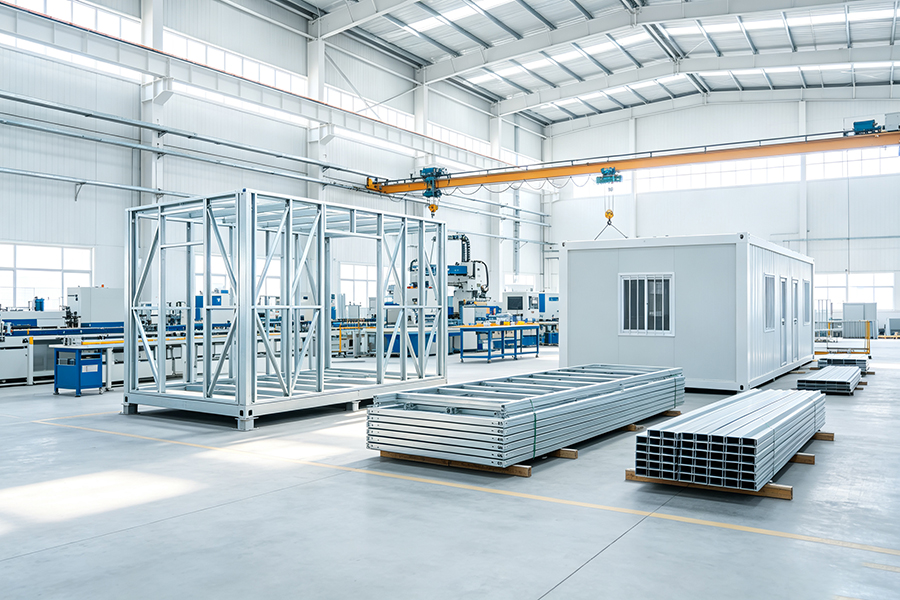
Time is the most critical factor in post-disaster rescue. Victims cannot wait for months of construction to obtain shelters. All flat pack container house units are manufactured and assembled inside factories. Production is not affected by the chaotic conditions of disaster areas. Once orders are confirmed, manufacturers can continuously produce complete housing units in batches.
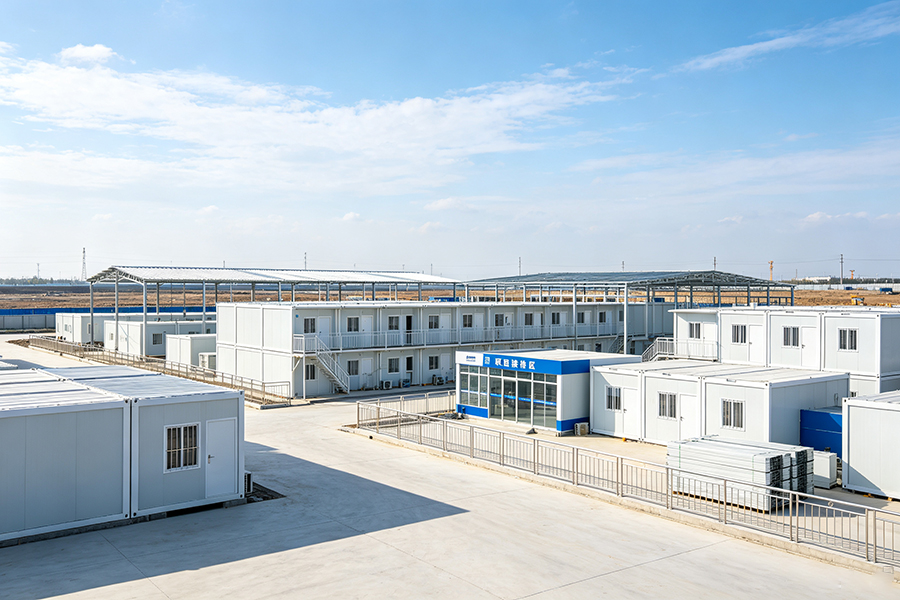
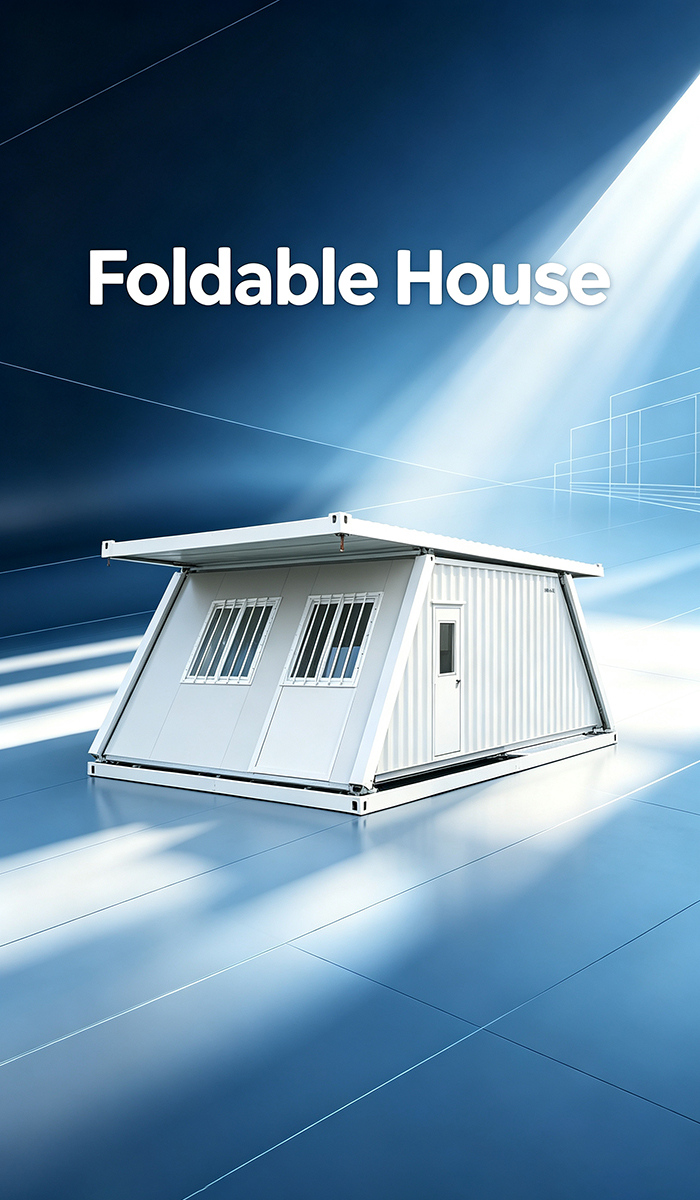
After transportation arrives at the affected site, basic flat ground is sufficient for installation. Professional teams can finish assembly of a single unit within several hours. A whole resettlement zone composed of dozens or hundreds of emergency accommodation units can be completed within days. Compared with traditional temporary shacks, container shelters allow disaster management departments to arrange residents into safe living spaces at the earliest stage, reducing secondary risks such as exposure, disease and homelessness.
Convenient Long-distance Transportation Adapted to Disaster Zones
Many disaster-stricken areas face damaged roads, collapsed bridges and limited transportation capacity. Bulk construction materials are hard to deliver. Flat-packed container components greatly reduce transportation volume. Multiple sets of wall panels, steel frames and accessories can be stacked into one standard shipping container. This feature cuts logistics costs and improves delivery efficiency.
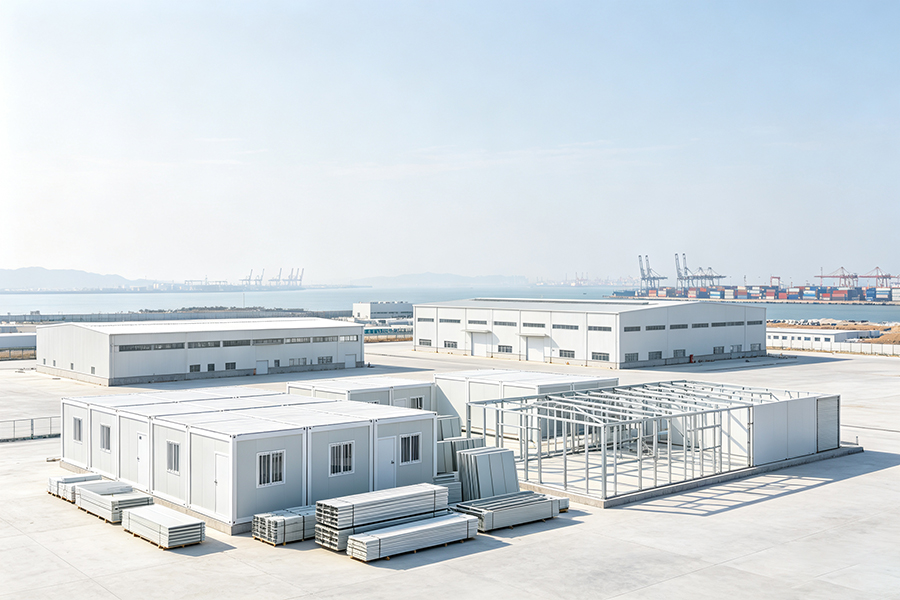
Assembled integral container units can also be transported by trucks or barges. Unlike fixed buildings, modular units do not rely on continuous supply of sand, cement and steel on site. For remote mountainous regions or islands hit by disasters, modular house solutions significantly lower the pressure of material supply chains, enabling humanitarian organizations to launch reconstruction plans smoothly.
Reliable Structural Safety and Weather Resistance
Temporary shelters must withstand harsh natural conditions after disasters. After earthquakes, aftershocks may continue for a long period; flood-affected areas face heavy rainfall and strong winds. Traditional makeshift tents and simple board houses have weak anti-wind, anti-seismic and waterproof performance.
Container houses adopt high-strength light steel frame as the main bearing structure. The closed box structure delivers stable seismic resistance and wind resistance. Sandwich wall panels provide waterproofing, heat insulation and sound insulation. Residents can avoid direct exposure to extreme temperatures, rain and wind. Manufacturers can also upgrade anti-corrosion treatments for units deployed in humid flood zones. As transitional housing, portable container house creates much safer living environments than ordinary temporary facilities.
Flexible Layout to Meet Diversified Functional Needs
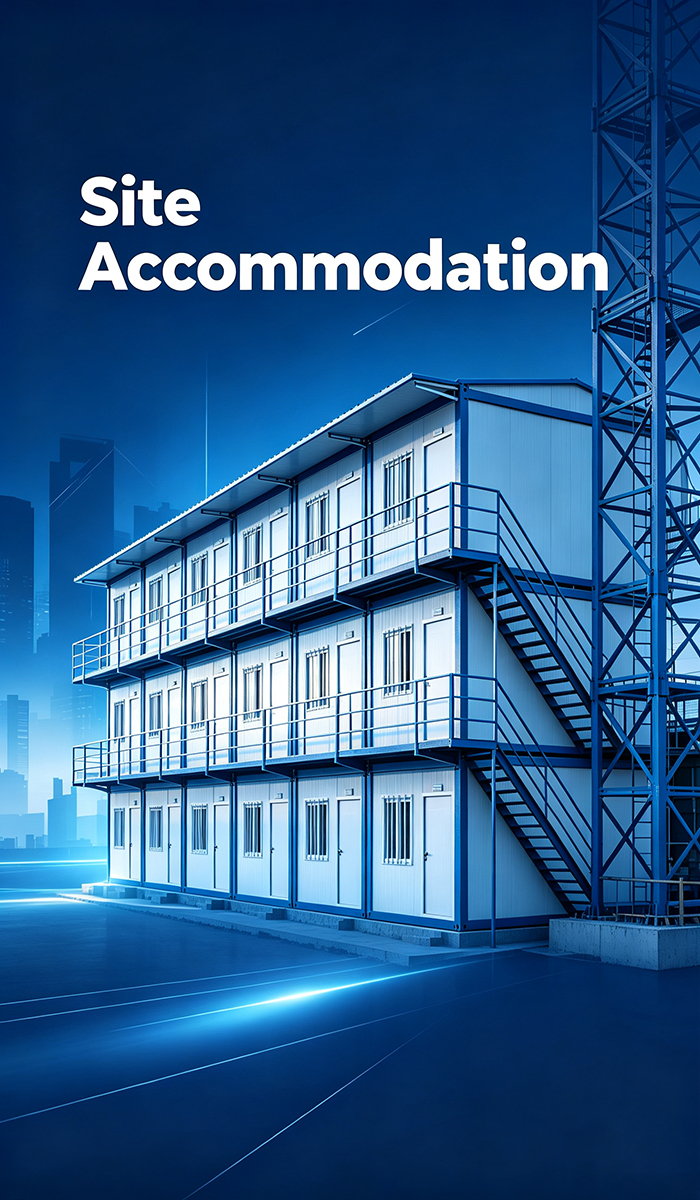
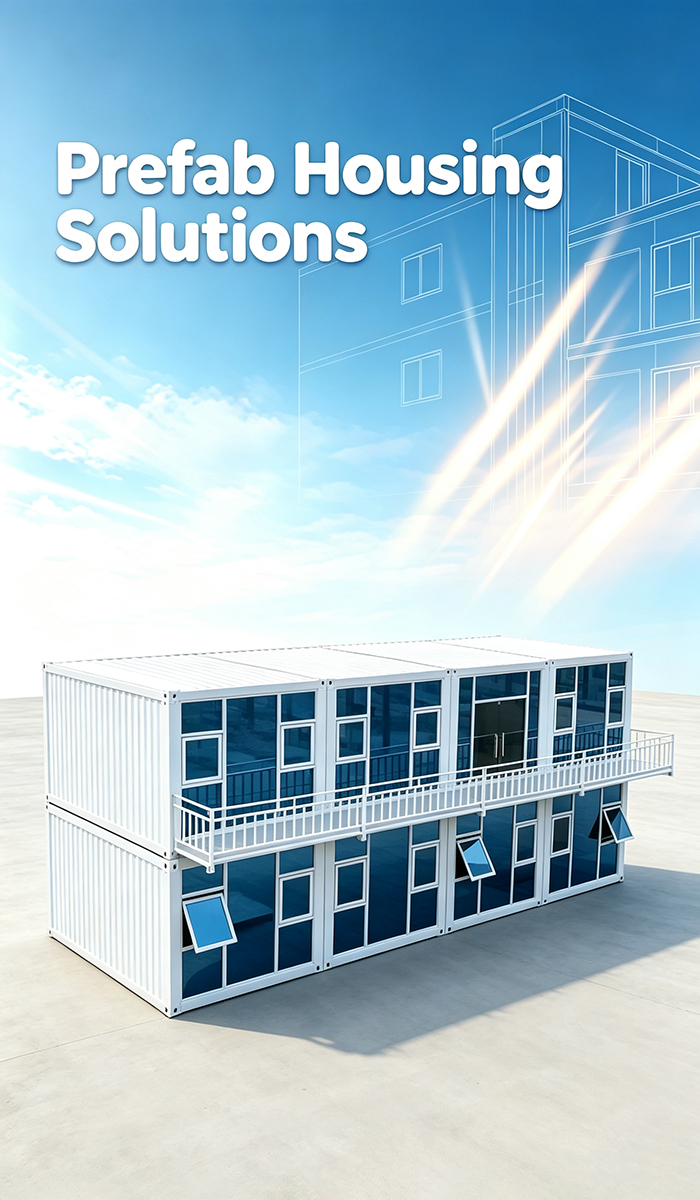
Post-disaster reconstruction requires more than residential shelters. Resettlement sites need supporting facilities including medical stations, temporary classrooms, management offices, storage warehouses and wash areas. Modular container units can be freely combined and stacked to form different functional zones.
Single units serve as independent living rooms. Connected units can expand into large-space container clinic, temporary school classrooms and command offices. Builders can adjust door and window positions, install water supply and drainage systems, and configure independent circuits according to practical demands. This flexible combination enables one set of container camp to satisfy residential, medical, educational and administrative demands simultaneously, forming a complete self-contained resettlement community.
Reusable and Eco-Friendly to Reduce Waste
Many transitional housing projects only require short-term use. After local permanent houses are built, temporary shelters are no longer needed. If reconstruction adopts non-recyclable makeshift buildings, a large amount of construction waste will be generated during demolition, bringing extra disposal pressure to disaster areas.
Container houses can be disassembled, packed and transported to other regions for repeated use. When one resettlement mission finishes, units can be recovered, maintained and reserved for future disaster relief or engineering projects. The recyclable characteristic reduces overall investment for governments and humanitarian organizations. Meanwhile, factory prefabrication minimizes on-site construction waste, which is vital for regions whose ecological environment has already been damaged by disasters.
Easy Maintenance and Low Site Requirements
Disaster areas usually lack complete construction equipment and professional maintenance teams. Container units have mature and simple structures. Daily maintenance only involves surface anti-rust treatment, waterproof inspection and circuit checking. Damaged wall panels or doors can be replaced separately without dismantling the whole building.
Another prominent advantage lies in low foundation requirements. Container houses do not need reinforced concrete foundations. Simple ground leveling or gravel bedding supports installation. This is extremely suitable for disaster zones where original ground infrastructure is destroyed, saving time and material costs during early resettlement work.
Fast production, convenient transportation, reliable safety, flexible combination, recyclability and low site requirements make container houses highly matched with the complex demands of post-disaster reconstruction. They act as a vital bridge connecting emergency rescue and long-term permanent housing construction. As global disaster relief systems continue to improve, modular container shelters will be widely adopted in more humanitarian reconstruction programs.
For organizations planning emergency shelter projects or temporary resettlement camps, contact FONZE HOUSE to obtain professional design schemes and factory-direct supply of custom modular container house units.
Brief Introduction of FONZE HOUSE
FONZE HOUSE supplies various modular buildings including flat pack container houses and integrated camp solutions. We provide standardized, disaster-resistant container units suitable for emergency resettlement and post-disaster reconstruction projects to global relief organizations and engineering contractors.