Fast-Assemble vs Flat-Pack Container Houses: Core Differences and Application Scenarios
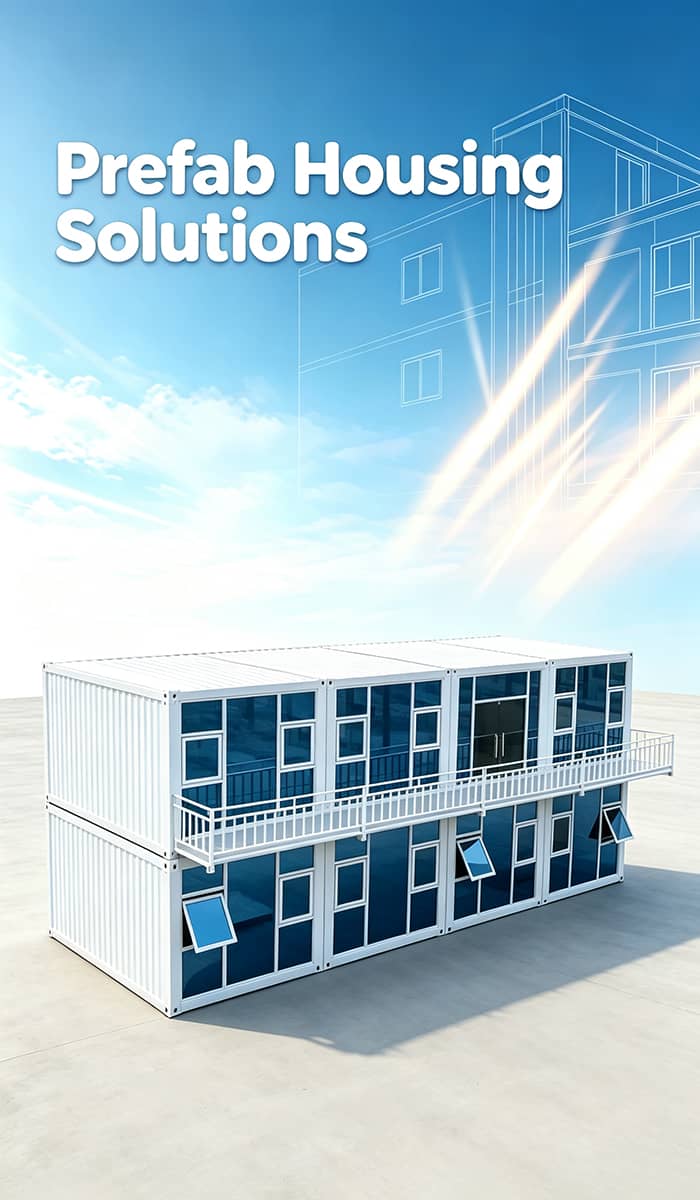
In global modular construction markets, fast-assemble container houses and flat-pack container houses are two dominant temporary building solutions widely used in construction site camps, mining bases, emergency accommodation and overseas infrastructure projects. Many overseas contractors and project owners often confuse these two modular products due to their similar box-type appearance and prefabricated features. In fact, they differ fundamentally in structural craftsmanship, connection methods, assembly logic, logistics efficiency, structural stability and service life. Choosing the right container type directly affects project cost, construction speed, safety performance and secondary turnover efficiency. This article systematically compares fast-assemble and flat-pack container houses from multiple professional dimensions, providing accurate product selection guidance for global engineering projects.
1. Structural Craftsmanship and Connection Mechanism
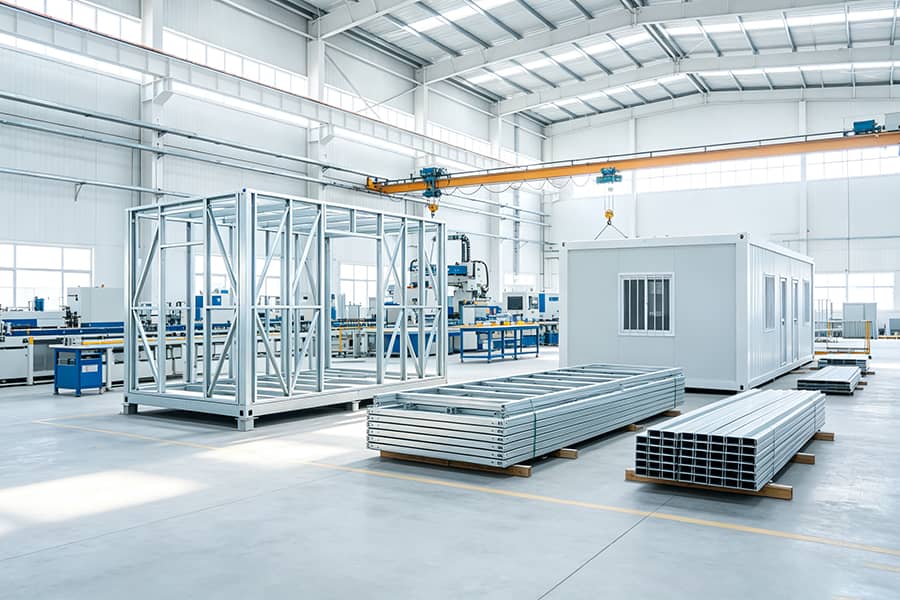
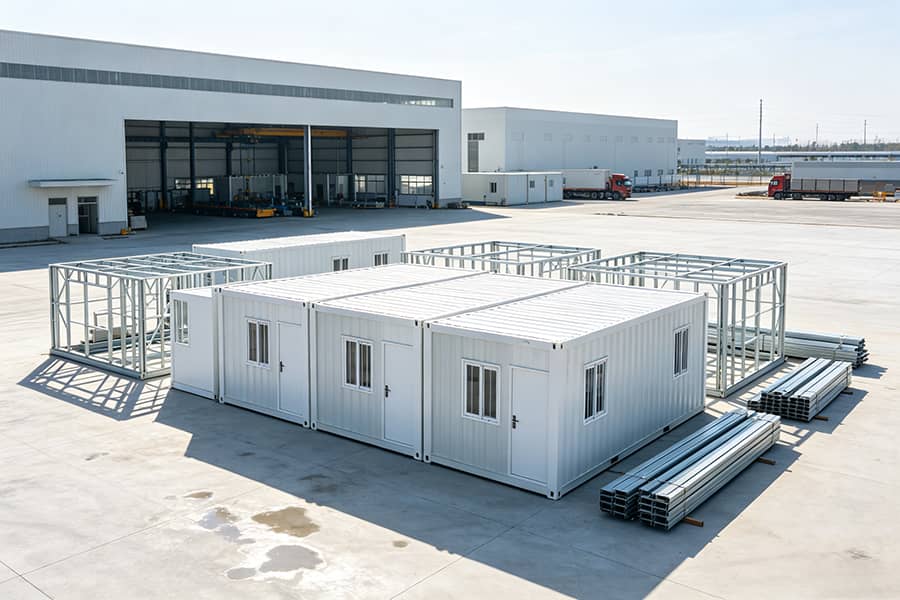
The essential difference between the two products lies in their frame connection structure, which determines overall structural rigidity and durability. Fast-assemble container houses adopt full bolt assembly technology. All columns, top beams and bottom beams are connected by high-strength galvanized bolts without any welding procedures. The whole frame is assembled like building blocks, with detachable and adjustable structural features. This bolted structure allows repeated disassembly and reassembly, but the overall structural integrity is relatively flexible, making it more suitable for frequent turnover scenarios.
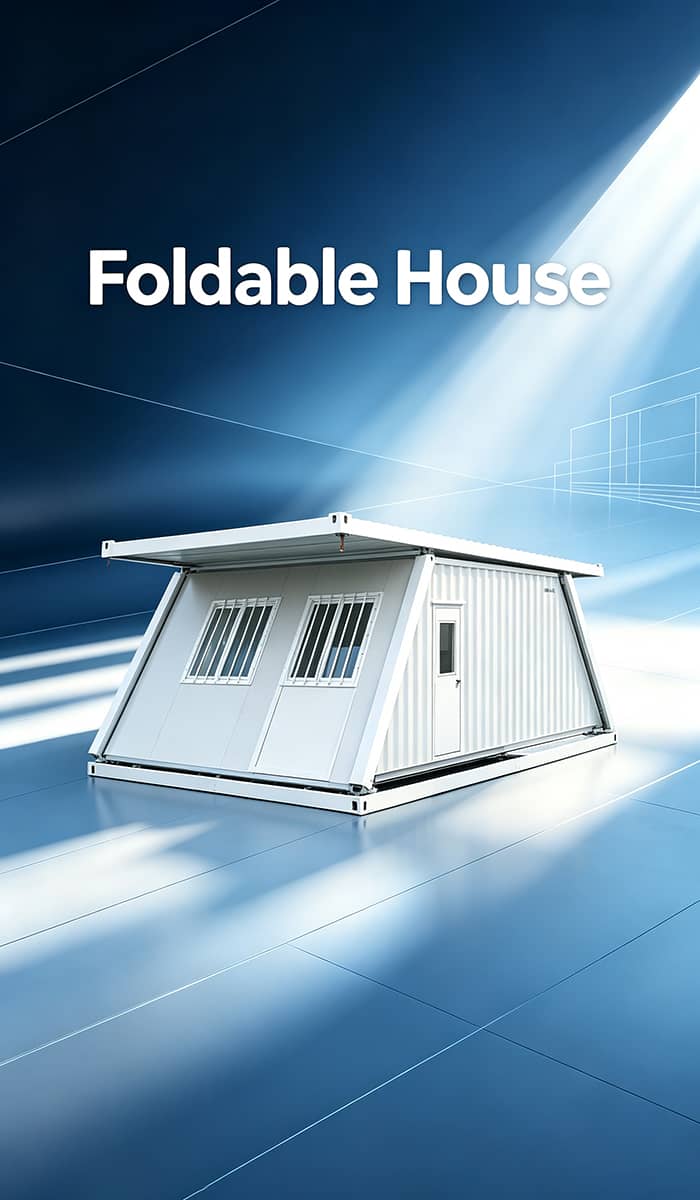
In contrast, standard flat-pack container houses adopt integrated welding technology on the main frame. The four-corner columns and integral bottom frame are factory-welded into a unified whole box base. Wall panels, roofs and accessories are packaged separately and assembled on-site. The welded frame forms a closed stress structure, delivering stronger overall rigidity, better torsion resistance and more stable load-bearing performance. Welded frame structures effectively avoid frame loosening caused by long-term vibration and multiple disassembly, providing higher structural safety for long-term fixed camps.
2. On-Site Installation Efficiency and Labor Demand
Fast-assemble container houses feature ultra-high assembly flexibility and low threshold installation. All components are standardized and lightweight. Workers only need simple tools to complete frame assembly, panel installation and basic wiring. A small team can finish one complete unit in a short time, supporting rapid large-area camp construction. This advantage is prominent for urgent emergency resettlement and short-cycle temporary projects that require instant occupancy.
Flat-pack container houses require more standardized installation processes. Although main frames are pre-welded, the matching of wall panels, waterproof layers and integral sealing structures demands stricter construction standards. The overall installation speed is slightly slower than fast-assemble types, but the finished product has better overall flatness and sealing performance. For large-scale standardized container camp projects pursuing unified appearance and high finished quality, flat-pack products show better comprehensive performance.
3. Logistics Performance and Overseas Shipping Cost
Logistics economy is a key factor for overseas cross-border projects. Fast-assemble container houses can be completely disassembled into scattered frames, plates and accessories. All components are stacked flat with zero redundant space, achieving extremely high container loading rate. This greatly reduces ocean freight and road transportation costs, especially suitable for small-batch, multi-batch overseas replenishment orders.
Flat-pack container houses retain integral welded bottom frames, which occupy certain fixed space after packaging. The loading density is slightly lower than fast-assemble products, leading to relatively higher unit logistics costs. However, the integrated frame avoids component loss and assembly errors during transportation. For one-time large-batch overseas engineering orders with fixed project locations, the stable shipping quality of flat-pack houses offsets partial logistics cost differences.
4. Safety Performance, Waterproofing and Wind Resistance
In terms of environmental adaptability, flat-pack container houses perform better in harsh working conditions. The integral welded frame has stronger wind resistance, seismic resistance and pressure resistance. The factory integrated waterproof structure effectively solves common water leakage problems of bolt-assembled structures. It can stably adapt to coastal windy, rainy and high-humidity environments as well as high-altitude strong wind areas.
Fast-assemble container houses with pure bolt connections have inevitable tiny gaps at splicing joints. After long-term outdoor exposure or multiple disassembly, aging of sealing strips may cause water seepage risk. Its structural stability is sufficient for conventional inland construction sites and short-term projects, but not recommended for long-term use in extreme harsh environments.
5. Service Life and Secondary Turnover Capacity
Fast-assemble container houses are designed for high-frequency turnover. Bolted connection will not produce welding deformation during disassembly. Components can be repeatedly assembled and transferred for many times, with low component loss rate. The service life is fully released in multi-project cyclic use, which is very cost-effective for engineering companies with continuous project iteration.
Flat-pack container houses focus on long-term static use. The welded frame has longer static service life and less structural aging. However, repeated disassembly and hoisting may cause welding stress fatigue and local deformation. Its advantages are more reflected in 2–5 years fixed project use, rather than frequent cross-region turnover.
6. Applicable Project Scenarios and Selection Suggestions
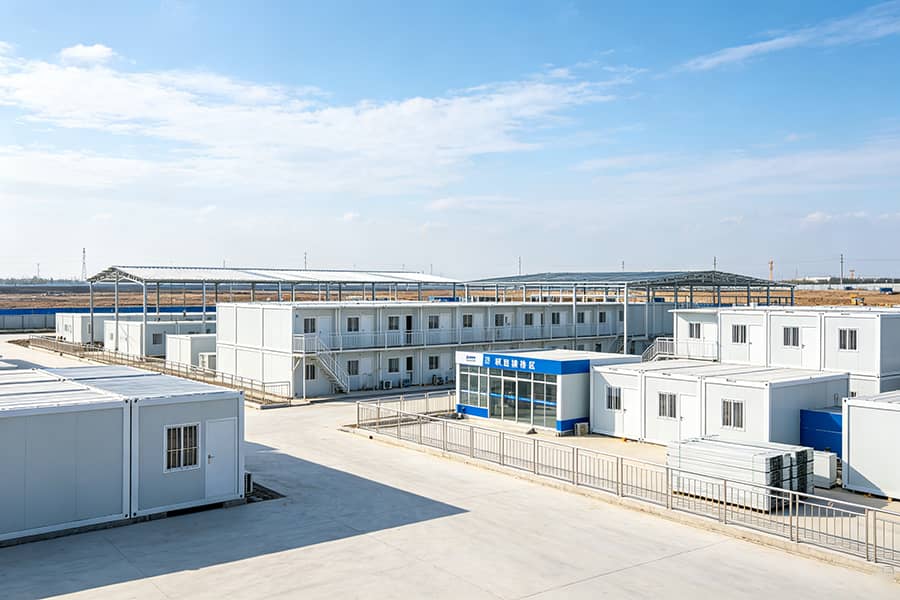
Fast-assemble container houses are ideal for short-term projects, emergency disaster relief, temporary commercial facilities and frequently migrated field projects. They balance ultra-low logistics cost and rapid deployment, maximizing asset utilization for mobile engineering teams.
Flat-pack container houses are more suitable for long-term fixed construction camps, permanent temporary office areas, living quarters and overseas government cooperation projects. Their stable structure, excellent waterproof performance and high overall compliance meet high-standard engineering acceptance requirements.
FONZE HOUSE provides both fast-assemble and flat-pack container house series. We offer targeted product selection and customized solutions according to project cycle, local environment and turnover demands for global overseas construction clients.
Fast-assemble and flat-pack container houses have their own unique advantages and positioning. Fast-assemble types excel in flexible assembly, low logistics cost and high turnover efficiency, while flat-pack types lead in structural stability, waterproof performance and long-term safety. Understanding their core differences helps overseas clients scientifically match products with project demands, effectively control comprehensive construction costs and improve camp operation safety. Reasonable product selection is the key to maximizing the value of modular container house temporary facilities in global infrastructure construction.
For professional product selection consultation and factory direct quotation for overseas modular camp projects, welcome to contact FONZE HOUSE.