Why Flat Pack Container Houses Are Commonly Seen on Modern Construction Sites
Walk into any large-scale infrastructure project, road and bridge engineering site, remote mining camp, or overseas government construction program, and one building type appears repeatedly: the flat pack container house. In recent years, flat pack container units have gradually replaced traditional temporary board houses and become the mainstream temporary building solution for global construction contractors. More international engineering companies, construction firms, and project developers choose flat pack container house solutions for their site accommodation, field offices, worker dormitories, and on-site functional rooms.
The popularity of prefab container buildings on construction sites is not accidental. It is driven by the unique characteristics of modern engineering projects, tighter construction schedules, stricter site safety standards, and growing demand for cost-effective, recyclable, and fast-deploy temporary facilities. Compared with traditional temporary buildings, flat pack container houses feature faster installation, higher structural safety, better environmental performance, and flexible reusability, perfectly matching the high-frequency, mobile, and short-cycle attributes of construction site operations.
1. Ultra-Fast Deployment Matches Intense Construction Schedules
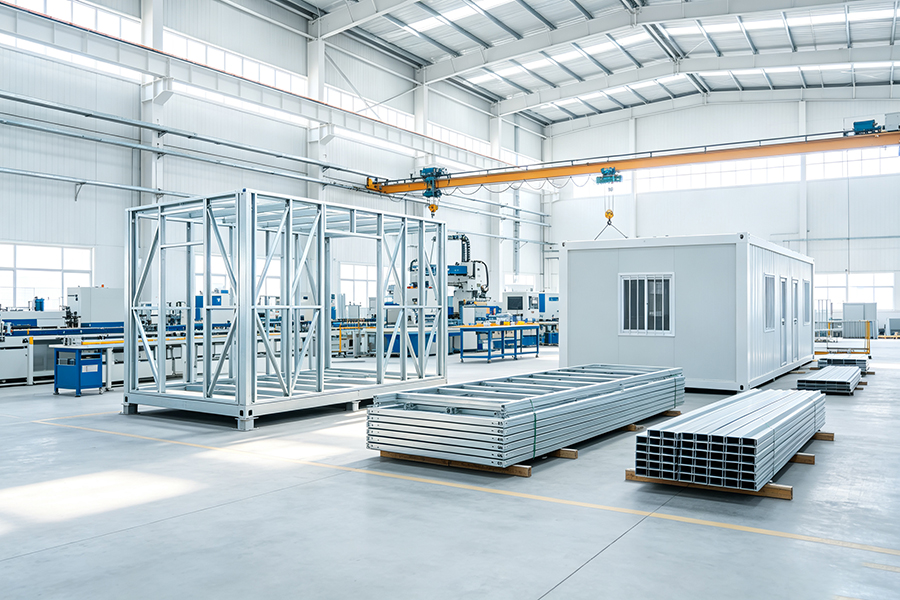
Modern construction projects worldwide pursue rapid project launch and tight delivery timelines. Traditional temporary buildings require foundation treatment, on-site welding, manual wall assembly, and long decoration cycles, which usually take one to two weeks or even longer to complete usable living and office spaces. In contrast, flat pack container houses are fully prefabricated in the factory. All steel frames, wall panels, ceilings, floors, doors, windows, and basic electrical systems are completed before leaving the factory.
Once arriving at the construction site, workers only need to complete simple assembly, fixing, and connection work. A standard prefab container office or container dormitory unit can be fully installed and put into use within several hours. For large-scale projects that require dozens of temporary rooms, the entire site camp can be completed within three to five days. This extremely fast deployment capability allows construction teams to settle in quickly, start preliminary preparation work earlier, and effectively shorten the overall project cycle.
For overseas engineering projects with tight schedules and limited local construction labor, the efficient assembly advantage of flat pack container houses becomes particularly prominent, helping contractors avoid project delays caused by slow temporary facility construction.
2. Excellent Mobility and Reusability for Mobile Engineering Projects
Most construction and infrastructure projects are temporary and mobile. After the completion of road construction, bridge engineering, railway projects, or remote mining operations, the on-site temporary camp needs to be demolished or transferred to new project locations. Traditional brick buildings and welded temporary houses cannot be moved and can only be discarded or demolished, generating massive construction waste and repeated investment costs.
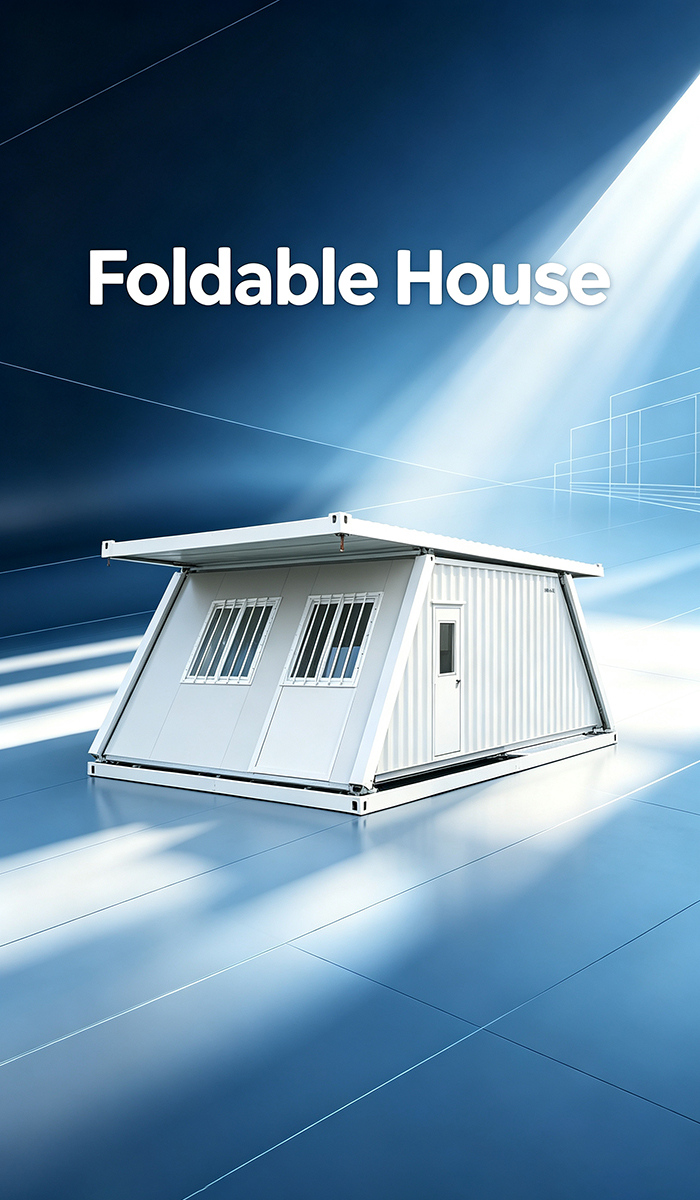
Flat pack container houses are specially designed for mobile engineering scenarios. The whole structure adopts modular assembly design, which supports integral hoisting, disassembly, packaging, and secondary transportation. When one project ends, container units can be disassembled into flat pack components, stacked and packed for transportation, and reassembled at the next construction site without damage to the main structure.
This high reusability greatly reduces the repeated investment of temporary facilities for construction enterprises. For long-term engineering companies with multiple overseas projects, custom modular container house resources can be circulated among different construction sites for many years, significantly improving asset utilization and reducing overall project operating costs.
3. Higher Structural Safety and On-Site Adaptability
Construction sites are usually located in complex and harsh environments, facing challenges such as strong wind, heavy rain, low temperature, high temperature, and uneven foundation conditions. Traditional color steel temporary houses have poor structural stability, weak wind resistance, and insufficient seismic performance, which easily cause safety hazards in extreme weather.
Flat pack container houses adopt high-strength light steel frame as the main load-bearing structure, with overall welding and bolt reinforcement technology. The standardized steel structure design enables the container units to resist strong winds, earthquakes, and external impact. The closed box-type structure greatly improves the overall stability compared with traditional assembled temporary buildings.
In addition, the wall panels adopt high-density fireproof and thermal insulation sandwich materials, which provide excellent fire resistance, heat insulation, and sound insulation effects. Whether in high-temperature desert construction sites, cold mountainous areas, or rainy coastal engineering zones, portable container house for sale units can provide stable, safe, and comfortable working and living environments for construction workers and management teams.
4. Flexible Combination to Meet Diversified On-Site Functional Needs
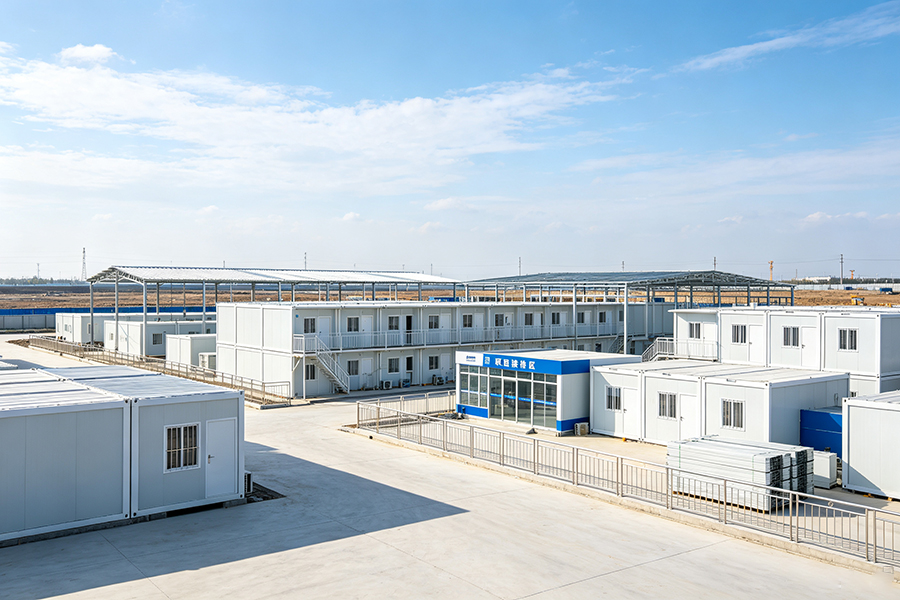
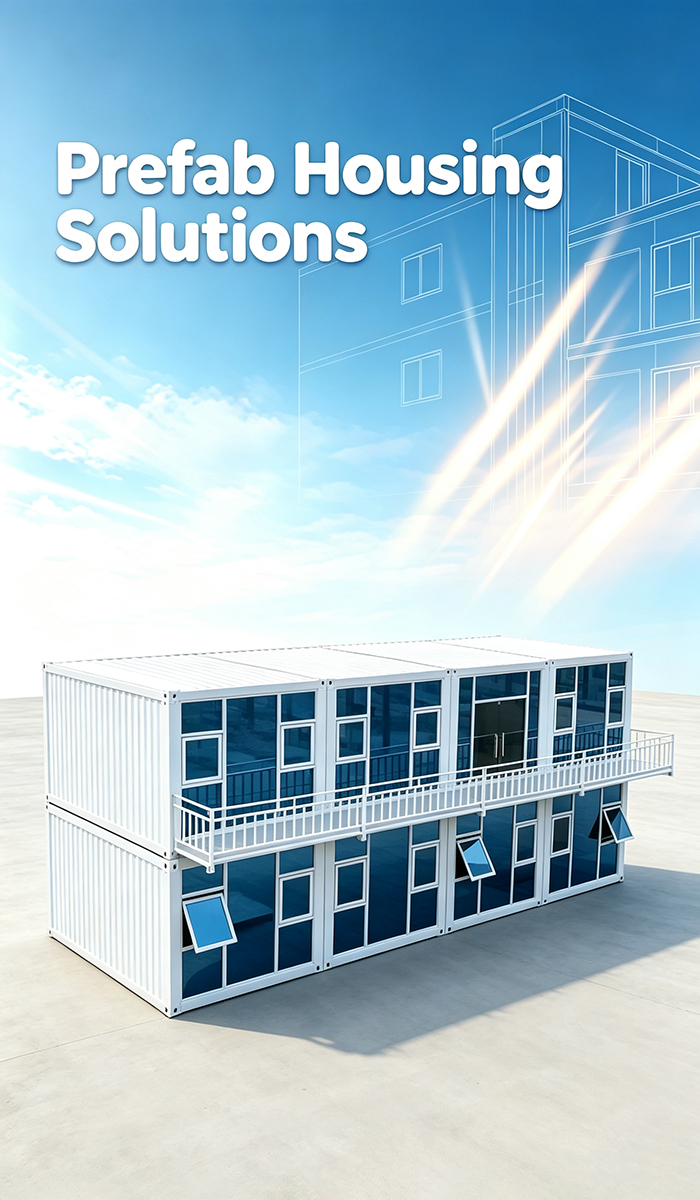
A complete construction site requires multi-functional supporting facilities, including project offices, meeting rooms, worker dormitories, canteens, shower rooms, warehouses, security rooms, and temporary isolation rooms. Flat pack container houses feature highly flexible modular combination characteristics, which can be freely spliced, stacked, and combined according to actual site scale and functional requirements.
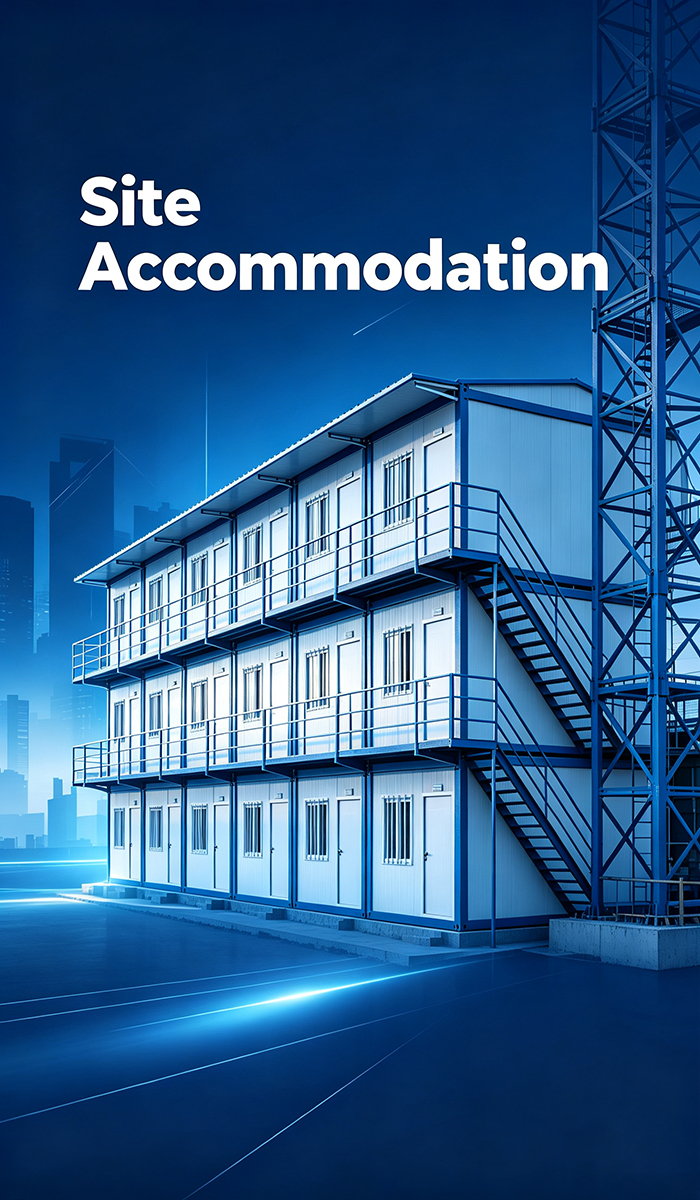
Single container units can be used as independent offices or single dormitories. Multiple units can be combined into large-area meeting rooms, office areas, and staff living areas. Two-layer stacking can save site space and build standardized multi-story site camps. Meanwhile, manufacturers can support personalized customization according to project needs, including window position adjustment, door type optimization, circuit layout upgrade, external color customization, and functional partitioning design.
For special engineering scenarios, flat pack containers can also be transformed into container clinic, temporary storage rooms, tool warehouses, and duty rooms, realizing full-scenario coverage of construction site functional facilities. This flexible combinability is the core reason why most engineering contractors prefer modular container camp solutions.
5. Cost-Effective and Economical for Large-Scale Camp Construction
Project cost control is always the core focus of construction enterprises. Compared with traditional brick temporary buildings, flat pack container houses have lower comprehensive costs in terms of material cost, labor cost, construction cycle cost, and post-project recycling cost.
Factory batch prefabrication greatly reduces on-site manual construction links and saves a large amount of labor costs. The short installation cycle allows the project team to put facilities into use quickly and create project benefits in advance. More importantly, the reusable feature enables container houses to avoid repeated procurement and construction investment, forming a long-term cost-saving advantage for construction companies.
Even for one-time short-term projects, the low input and zero-waste dismantling characteristics of low cost prefab tiny house and flat pack container units can effectively reduce project auxiliary expenses, bringing more economical and efficient temporary building solutions for global engineering projects.
6. Green and Environmentally Friendly, In Line with Modern Construction Standards
With the continuous improvement of global environmental protection requirements for engineering construction, green construction and low-carbon project management have become important assessment indicators for international engineering bidding and project acceptance. Traditional temporary building construction produces a large amount of construction waste, dust pollution, and building garbage after demolition, which cannot meet environmental protection standards.
Flat pack container houses belong to typical green modular buildings. The whole production process is completed in the factory with standardized industrial production, which produces little on-site pollution. All steel structures and wall materials can be recycled and reused, realizing zero construction waste after project demolition. The thermal insulation and energy-saving materials adopted by the container house can also reduce daily energy consumption of air conditioning and lighting, achieving low-carbon operation of the construction site.
For overseas government projects, international aid projects, and large-scale enterprise engineering projects that emphasize ESG environmental assessment, flat pack container camps have become the standard compliant solution.
7. Convenient Transportation and Low Site Requirement
Many overseas infrastructure and mining projects are located in remote areas with inconvenient transportation and incomplete site conditions. Traditional temporary buildings require complete construction conditions, flat foundation, and abundant construction materials, which are difficult to implement in remote wild construction sites.
Flat pack container houses adopt flat folding packaging design after disassembly, with small transportation volume and high loading rate. A single container truck can load a large number of flat pack units, greatly reducing ocean freight and road transportation costs. Meanwhile, the container house has low requirements for the construction foundation. It can be installed simply through leveling the ground or laying a simple concrete foundation, adapting to various complex terrain environments such as mountains, wilderness, deserts, and coastal tidal flats.
Brief Introduction of FONZE HOUSE
FONZE HOUSE (Fonze Building Materials Beijing Co., Ltd.) is a professional Chinese manufacturer specializing in prefabricated modular buildings and container house solutions. With over 20 years of manufacturing experience and standardized factory production systems, the company supplies high-quality flat pack container house, detachable container house, expandable container house, and site camp solutions for global construction, mining, disaster relief, and infrastructure projects, providing stable and reliable temporary building support for overseas engineering contractors.